

PPWR is here: make packaging compliance a data problem, not a firefight
The EU Packaging and Packaging Waste Regulation (PPWR) turns every finished packaging into a traceable, data-rich asset and the only effective way to keep up is to treat Declarations of Conformity (DoC) as live digital records, not static PDFs.
PPWR is now a live operational challenge
PPWR is a binding law that reshapes how packaging is designed, labeled, and tracked across its full lifecycle in the EU. It raises the bar on recycled content, recyclability, and material transparency, while tying everything back to a DoC that has to stand up to scrutiny.
From February 11, 2025, PPWR enters into force and by August 12, 2026, the general application date hits, with harmonized QR labelling and Digital Product Passport (DPP) requirements phasing in through 2030. That is a short runway if your packaging data still lives in spreadsheets, emails, and disconnected supplier portals.
For global brands shipping thousands of SKUs into Europe, this is not a documentation problem, it is a systems and workflow problem that starts in the first mile of the supply chain.
The hidden cost of scattered packaging data
Most organizations already collect what PPWR needs, just not in a way that can be easily trusted or reused. Material composition, packaging weights and formats, supplier details, and plant-level specs are typically spread across PLM, ERP, shared drives, and vendor emails.
- That fragmentation leads to very practical risks:
- High likelihood of non-compliance because no one sees the full picture.
- Inability to verify claims when a regulator or customer challenges a DoC.
- Erosion of trust with retail partners and brand owners who depend on your data to prove their own compliance.
A typical example:
A packaging engineer updates a linerboard spec in one system, but the DoC PDF is never refreshed; months later, that pack is on shelf in multiple EU markets with an outdated declaration that no longer reflects reality. PPWR makes this gap visible and material.
Turning the DoC into a live digital record
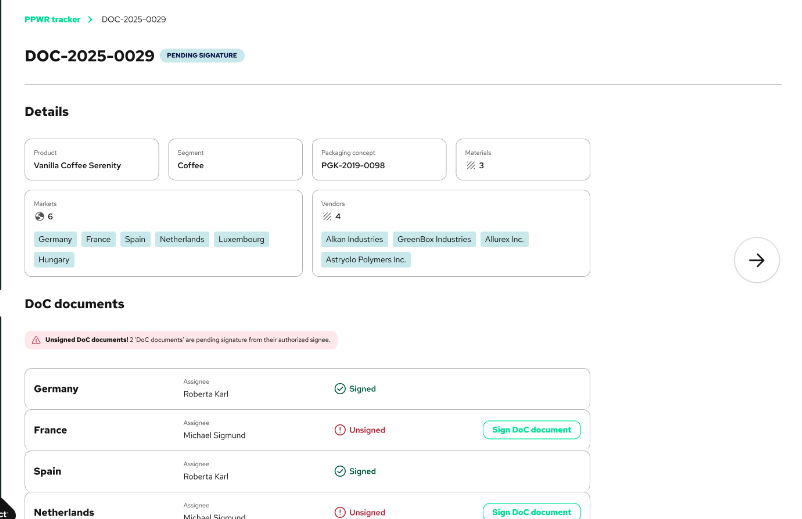
The fastest way to make PPWR manageable is to centralize Declarations of Conformity in a single system of record that links back to real master data, not manual rekeying.
In practice, this looks like:
Import: connect BOMs, materials, and packaging masters so each DoC pulls from controlled sources.
Manage: assign clear signatories across legal, compliance, and operations, with ownership defined per market or product line.
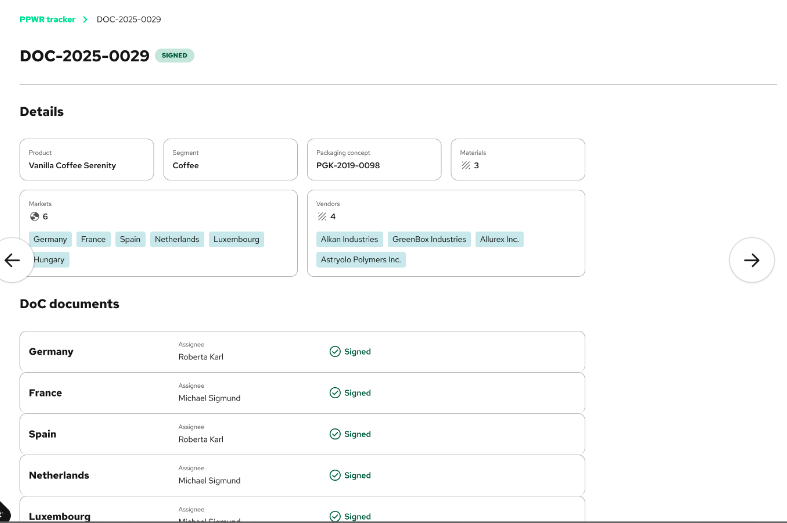
Execute: route DoCs through secure e-signature workflows with full audit trails.
Monitor: filter by product, country, and status to close gaps before they become issues.
In this setup, the DoC becomes a living object: it updates when inputs change, retains a complete version history, and can be surfaced instantly when a regulator or customer requests evidence. Country and region-specific requirements are handled as configuration, so a single product can generate market-appropriate DoCs without rebuilding everything from scratch.
Connecting first-mile suppliers to your PPWR obligations
PPWR requirements cannot be met from headquarters alone; they depend on accurate, timely data from converters, co-packers, and material suppliers. If you cannot trace the origin and composition of packaging components, you cannot credibly sign a declaration.
A practical PPWR-ready setup links:
- Materials: detailed composition data at component level, including barriers, inks, and closures.
- Origins: the source of each packaging component and plant-level information where relevant.
- Supplier documentation: direct connections to vendor certificates and specifications, so you are not copying data into yet another spreadsheet.
For a global beverage brand, this might mean each bottle, cap, and label is tied to a single, verified data source; when a supplier updates recycled content or changes a plant, those changes flow into the relevant DoCs and trigger review, rather than sitting unnoticed in a PDF on a shared drive.
Giving every stakeholder the tools they need
PPWR compliance only scales if everyone involved in packaging can see the same information and act on it in simple, repeatable ways.
In a mature setup:
- Manufacturers replace ad hoc spreadsheets with controlled workflows that govern how new packs are approved.
- Packaging specialists ensure specifications reflect the correct materials and plants before anything is put on the line.
- Compliance managers see coverage and gaps by product and market, and can intervene before launch.
Legal teams sign with confidence using e-signatures backed by audit logs.
- Auditors and internal assurance teams can access version history and confirm the DoC was valid at the time of sale.
Features like multi-signatory workflows, notifications, and prioritization filters keep the focus on the few actions that unblock compliance, rather than a generic task list no one can manage.
Preparing now for Digital Product Passports
PPWR does not exist in isolation; it sits alongside the Ecodesign for Sustainable Products Regulation (ESPR), Digital Product Passports, and future ESG rules that will only increase the data burden on packaging teams.
The same data model you need for a robust PPWR DoC (materials, origins, weights, supplier linkages, and versioned declarations) is what will underpin packaging-related DPPs from 2028 onwards. DPP phase-in across sectors begins between 2026 and 2030, with packaging requirements likely adopted around 2028, including harmonized QR codes that consumers can scan to access recycling and lifecycle information.
By building a unified compliance platform that supports both PPWR and other regulations, companies gain a holistic view across product lines, can benchmark performance, and reduce the reporting burden instead of duplicating work for every new rule. The outcome is straightforward: packaging data that is reliable enough to sign today, and structured enough to power the digital product experiences coming next.
If you’d like to see how our platform puts all of this into practice, get in touch with us.